
Advent Hope for Kids: How Hope Changes the Brain & Learning
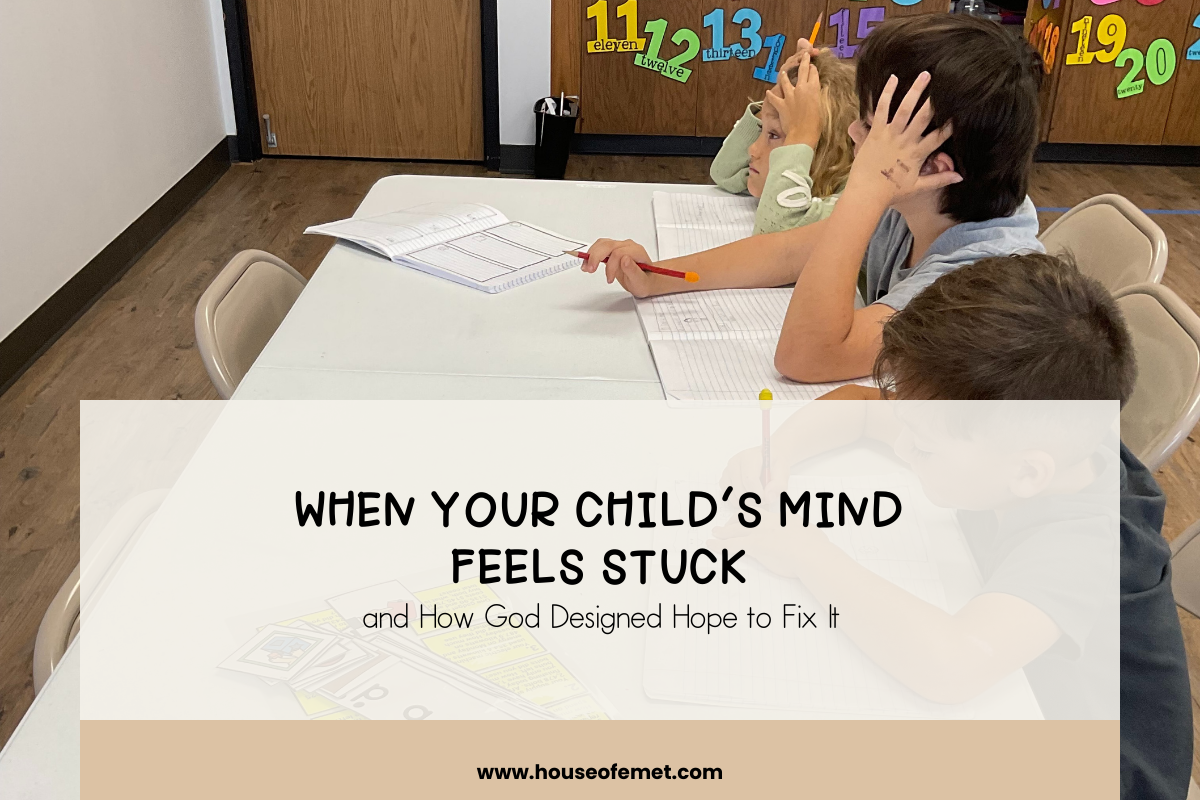
Parents often ask me, “Why does my child shut down the moment learning gets hard? Is it anxiety? Is it confidence? Is it me?”
And honestly?
The Bible answered that long before neuroscience did:
“Hope deferred makes the heart sick.” — Proverbs 13:12
But the beautiful thing is this:
Science is finally catching up to Scripture.
Your child’s mind was created to renew, reshape, and root itself in hope.
Not wishful thinking.
Not “try harder” energy.
Not shallow positivity.
But biblical hope — the kind that anchors a child’s emotions and activates the parts of the brain responsible for problem-solving, confidence, and motivation.
This is the heart of Advent Week 1.
And the heart of how kids heal, learn, grow, and rise.
What Parents Need to Know: What is Hope, Really?
(And why does it matter for learning?)
In psychology, hope isn’t a feeling — it’s a thinking skill.
A set of mental habits children can learn.
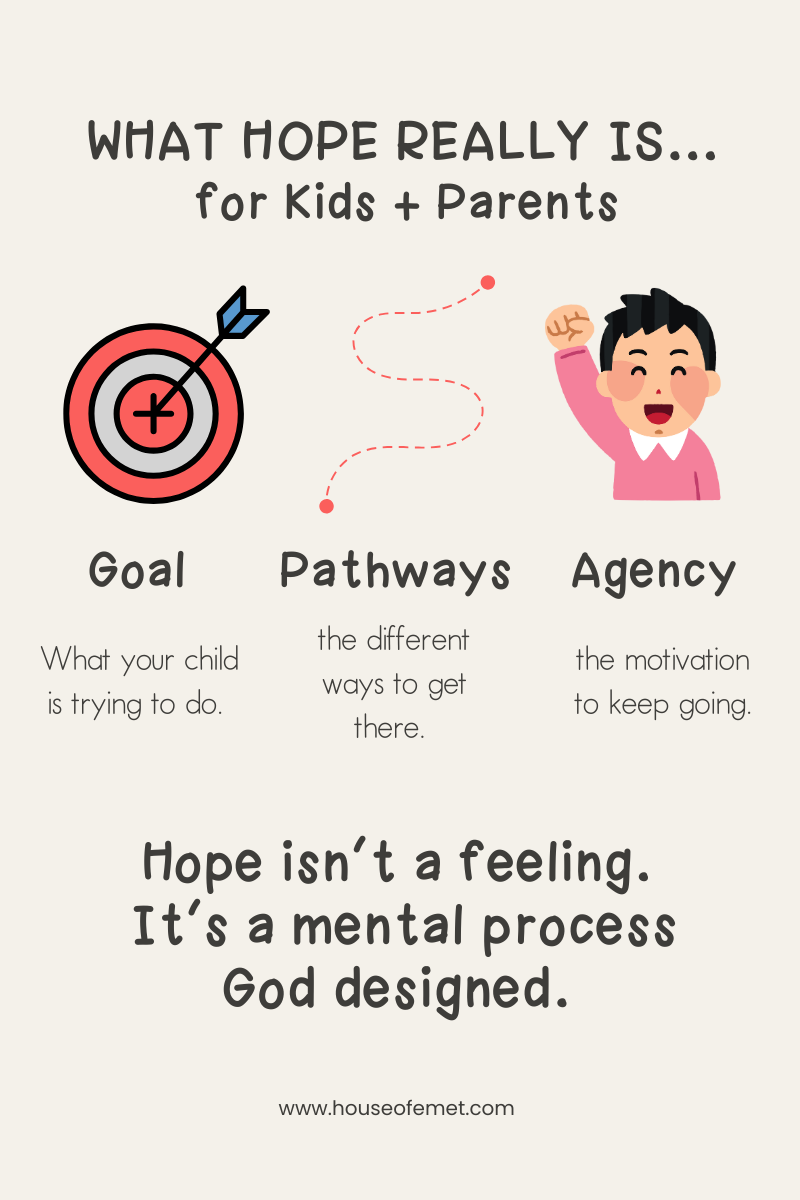
Snyder’s Hope Theory explains that hope has three parts:
✔ A Goal:
“I know what I’m working toward.”
✔ A Pathway:
“I can imagine a way to get there.”
✔ Agency:
“I believe I can do it.”
When a child has all three, their brain stays open, curious, and willing to try again.
But when even one part is missing?
The mind freezes.
Not because the child is lazy.
Not because they’re behind.
But because they cannot imagine a path forward.
This is where hope becomes holy.
Scripture teaches the same pattern:
Praise → lifts the eyes (Psalm 71:14)
Prayer → awakens expectancy (Job 10:9)
Trust → activates confidence in God’s guidance (Psalm 37:23)
Hope is both cognitive and spiritual.
And kids need both ends of that bridge.
How Hope Literally Changes a Child’s Brain
Here’s what shocked me the most:
Hope + learning creates stronger brain changes than learning alone.
Meaning:
A hopeful child learns faster, remembers more, and bounces back quicker.
Research shows positive changes in:
The basal ganglia (motivation)
The hippocampus (memory, emotional stability)
The corpus callosum (whole-brain communication)
That's not fluff.
That’s God’s design.
Thought patterns can be reshaped when kids are given:
Gentle guidance
Emotional safety
Multiple pathways to solve a problem
Identity-rooted encouragement
A learning environment anchored in truth
This is why micro-schools like House of Emet are powerful for kids who lose confidence in traditional settings.
Our classrooms are built for:
✔ Slower rhythms
✔ Personalized pathways
✔ Emotional safety
✔ Spiritual formation
✔ Mastery over memorization
We’re not just teaching content.
We’re building hope.
Why House of Emet is Built Around Hope (Not Pressure)
As I’ve watched kids in my classroom this year, one truth keeps repeating itself:
Children don’t thrive because learning gets easier —
they thrive because pathways get clearer.
Big classrooms can’t always provide that.
Fast-paced curriculum doesn’t always allow it.
But a micro-school can.
And at House of Emet, we intentionally create the kind of atmosphere where hope becomes possible again:
slower rhythms
personalized instruction
hands-on exploration
emotional safety
spiritual grounding
gentle correction
and space to try again without shame
When a child walks into our little school, they don’t just enter a classroom —
they enter an environment designed for renewal.
Because when hope returns, learning follows.
Every single time.
Identity → Meaning → Hope → Renewal
One study found that “hope training” reduced symptoms of depression for up to six months — not only emotionally, but neurologically.
When a child understands who they are and what their life means:
Their emotions stabilize
Their hope strengthens
Their resilience grows
Their brain begins reorganizing itself in healthier ways
This is why identity in Christ isn’t optional.
It’s foundational.
Without identity, kids drift.
With identity, they rise.
A Hope that Anchors the Soul (For Kids & Parents)
“We have this hope as a sure and steadfast anchor for the soul…” — Hebrews 6:19
Hope is more than a feeling — it's an anchor that keeps the mind:
grounded
resilient
steady
secure
For our kids, this anchor protects them from discouragement.
For us as parents and educators, it keeps us steady when the assignment feels heavy.
At House of Emet, we cultivate:
Biblical hope — rooted in God’s faithfulness
Cognitive hope — rooted in the mind’s ability to change
Emotional hope — rooted in safety and belonging
A whole-mind, whole-heart, whole-child hope.
Why Hope Matters for Micro-Schooling, Homeschooling, & Parenting
Children learn best when they feel hopeful.
Their brains grow when they believe something is possible.
Their identity shapes their confidence.
Their hope strengthens the structure and function of their brain.
This is education.
This is discipleship.
This is mental health.
This is Kingdom.
And the best part?
Hope can be taught.
