
How Students Actually Learn in a Multi-Age Microschool Classroom
One of the most common questions parents ask when they first learn about House of Emet is:
"How do you teach multiple grades in one classroom?"
It's a fair question.Understanding how multi-age classrooms work is often one of the biggest hurdles for families exploring microschool education for the first time.
Most of us grew up in traditional classrooms where every student was the same age and worked on the same lesson at the same time. A multi-age classroom can feel unfamiliar at first.
But here's what many parents discover: children are already learning from people older and younger than themselves every day. Siblings learn from one another. Younger children imitate older children. Older children reinforce their understanding by teaching younger ones.
A multi-age classroom simply creates space for those natural learning relationships to happen intentionally.
Here's what learning actually looks like in a multi-age microschool classroom.
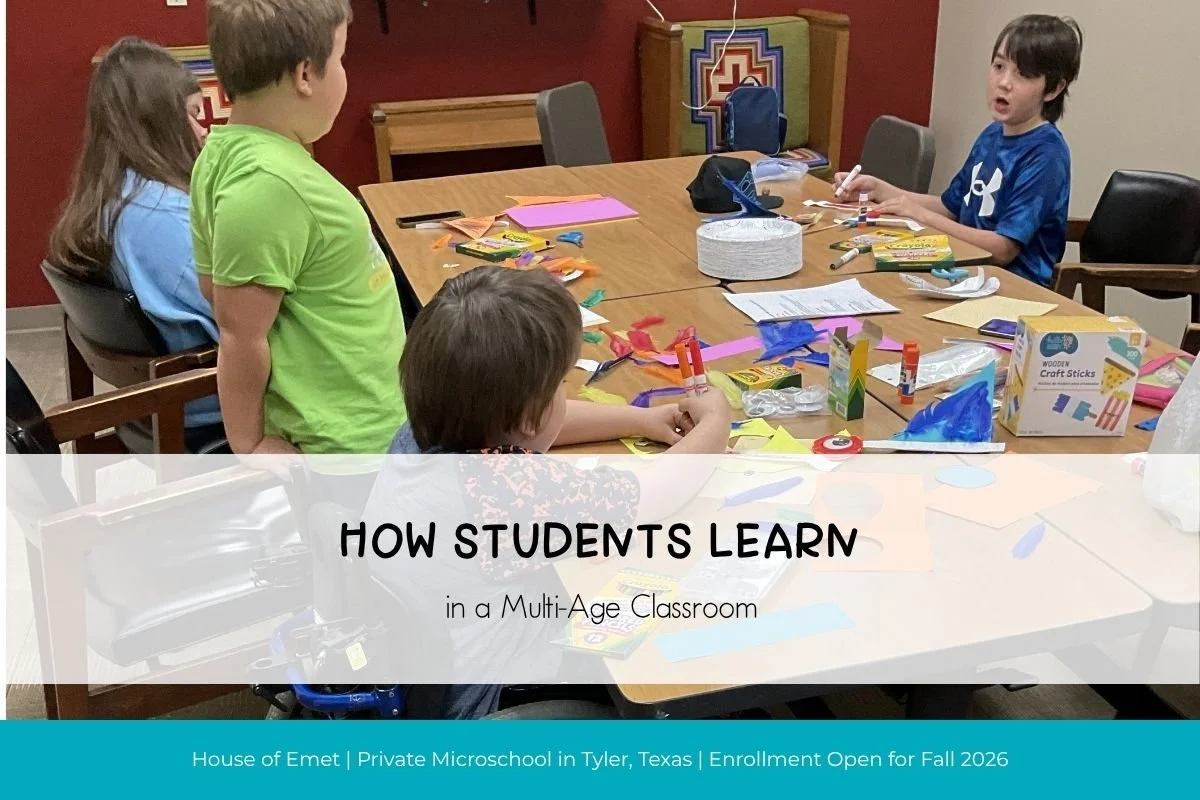
Multi-age classrooms allow students to learn at their instructional level while benefiting from collaboration, mentorship, and personalized support.
Students Learn at Their Instructional Level, Not Just Their Grade Level
This is one of the foundations of personalized learning and one of the reasons many families are drawn to microschools.
One of the biggest misconceptions about education is that every child in the same grade learns at the same level.
In reality, that's rarely true.
A child may:
Read two grade levels above their age.
Need additional support in math.
Excel in writing.
Struggle with spelling.
Understand science concepts quickly.
Need more time with foundational skills.
Children are wonderfully unique.
At House of Emet, we focus on where students are academically rather than assuming they should all be in the exact same place because of their age.
This allows us to provide support where students need it and challenge them where they are ready to grow.
Instead of asking:
"What grade is this child in?"
we often ask:
"What does this child need next?"
Older Students Are Not Held Back
One concern parents sometimes have is:
"Won't older students spend all their time waiting on younger students?"
The answer is no.
In a well-designed multi-age classroom, students continue progressing along their own learning path.
In fact, older students often deepen their understanding when they explain concepts to younger classmates.
Research consistently shows that teaching others strengthens learning.
When older students:
Explain a math strategy,
Help a younger student understand directions,
Read with a younger classmate,
they aren't losing learning opportunities.
They're reinforcing what they already know.
Leadership becomes part of the learning process.
In a mixed-age classroom, students are not competing against one another for the same learning experience. Instead, they are growing along their own academic pathway.
Students grow academically while also developing confidence, communication skills, and responsibility.
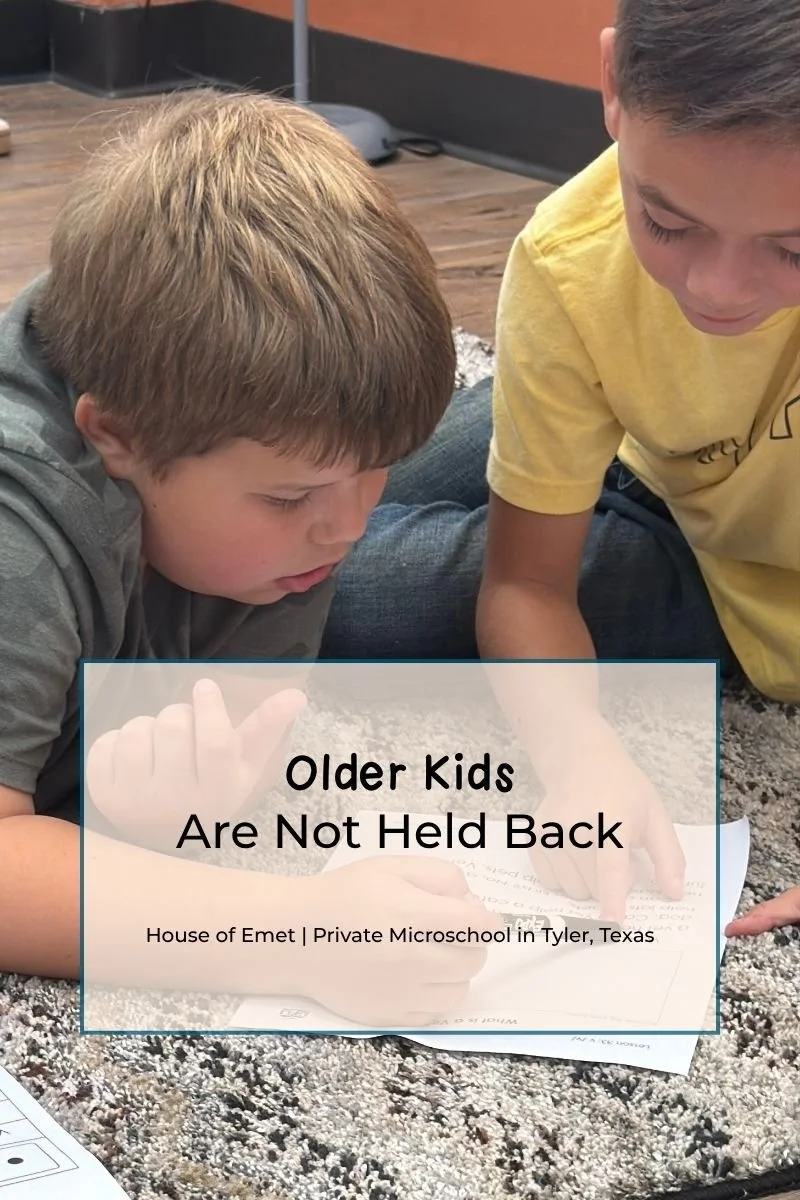
Teaching and mentoring younger students often strengthens an older student's own understanding and leadership skills.
Younger Students Benefit from Exposure to Advanced Learning
Multi-age classrooms don't just benefit older students.
Younger students are constantly exposed to higher-level thinking.
They hear:
More advanced vocabulary.
Richer discussions.
Older students solving complex problems.
Academic conversations beyond their current grade level.
This exposure naturally stretches their thinking.
Many younger students become curious about concepts they may not formally study for another year or two.
They begin asking questions.
They become interested in new ideas.
They see what's possible.
This doesn't mean younger students are expected to master advanced content before they're ready.
It simply means they are learning in an environment where growth is visible.
One of the greatest benefits of multi-age learning is that younger students are regularly exposed to ideas, vocabulary, and discussions beyond their current grade level.
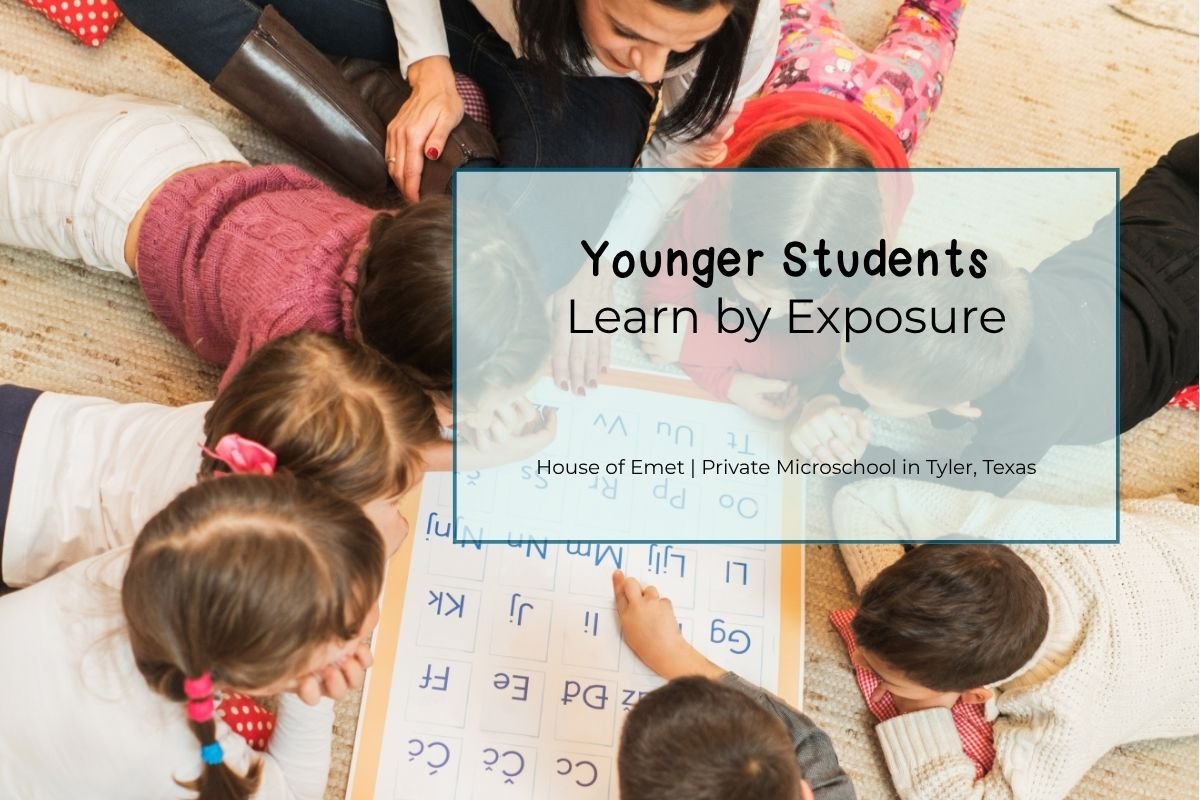
Exposure to advanced vocabulary, discussions, and problem-solving helps younger students grow academically and socially.
Individualized Learning Looks Different in a Multi-Age Classroom
At House of Emet, students are not all completing the exact same assignment at the exact same time.
Instead, students work along individualized learning paths designed to help them grow from where they currently are.
This might look like:
Small-group instruction.
Independent practice.
One-on-one teacher support.
Collaborative projects.
Flexible learning blocks.
Students may even have some choice in the order they complete certain tasks throughout the week.
This flexibility allows the teacher to spend targeted time with students who need additional support while allowing others to continue progressing.
The goal isn't to keep every child on the same page.
The goal is growth.
Real Learning Rarely Happens in Perfect Grade-Level Boxes
Traditional schools often organize students by age because it is efficient.
But learning itself isn't always efficient.
A child may master multiplication quickly while needing additional time to develop reading fluency.
Another student may write beautifully but struggle with math facts.
Children grow in different areas at different rates.
A multi-age classroom acknowledges this reality.
Rather than forcing students into rigid academic boxes, it creates opportunities for personalized instruction, meaningful support, and authentic growth.
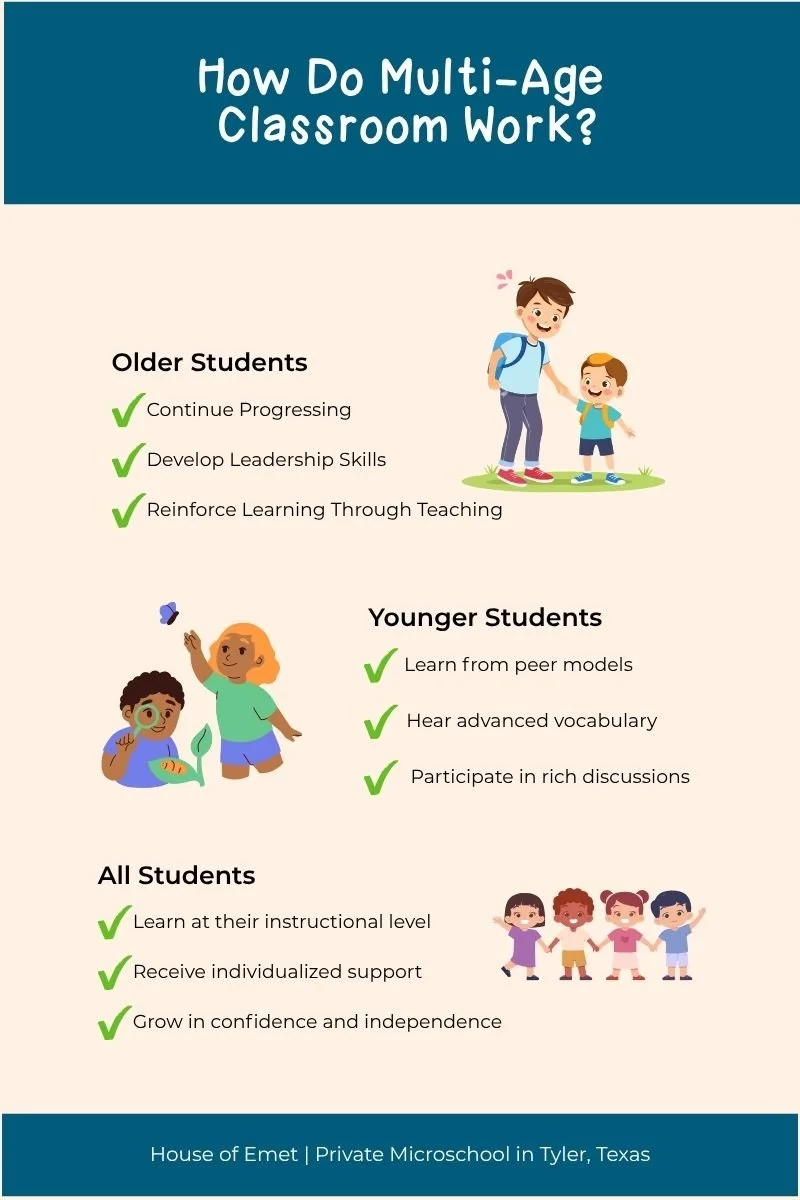
A visual guide showing how multi-age classrooms support individualized learning and student growth.
Is a Multi-Age Classroom Right for Your Child?
If you're considering a microschool, it may be helpful to ask yourself:
Do I value personalized learning over one-size-fits-all instruction?
Am I comfortable with my child learning alongside students of different ages?
Do I want my child challenged at their instructional level?
Do I value relationships, mentorship, and leadership opportunities?
For many families, the answer is yes.
And that's why they choose a microschool.
Read Next
What You Need to Know Before Choosing a Microschool Like House of Emet
New to microschools? Learn what a microschool is—and what it isn't.
A Day at House of Emet: What Learning Really Looks Like
Take a behind-the-scenes look at what students actually do throughout the school day.
How We Measure Student Progress at House of Emet
Learn how we track growth, identify learning gaps, and celebrate student progress.
