
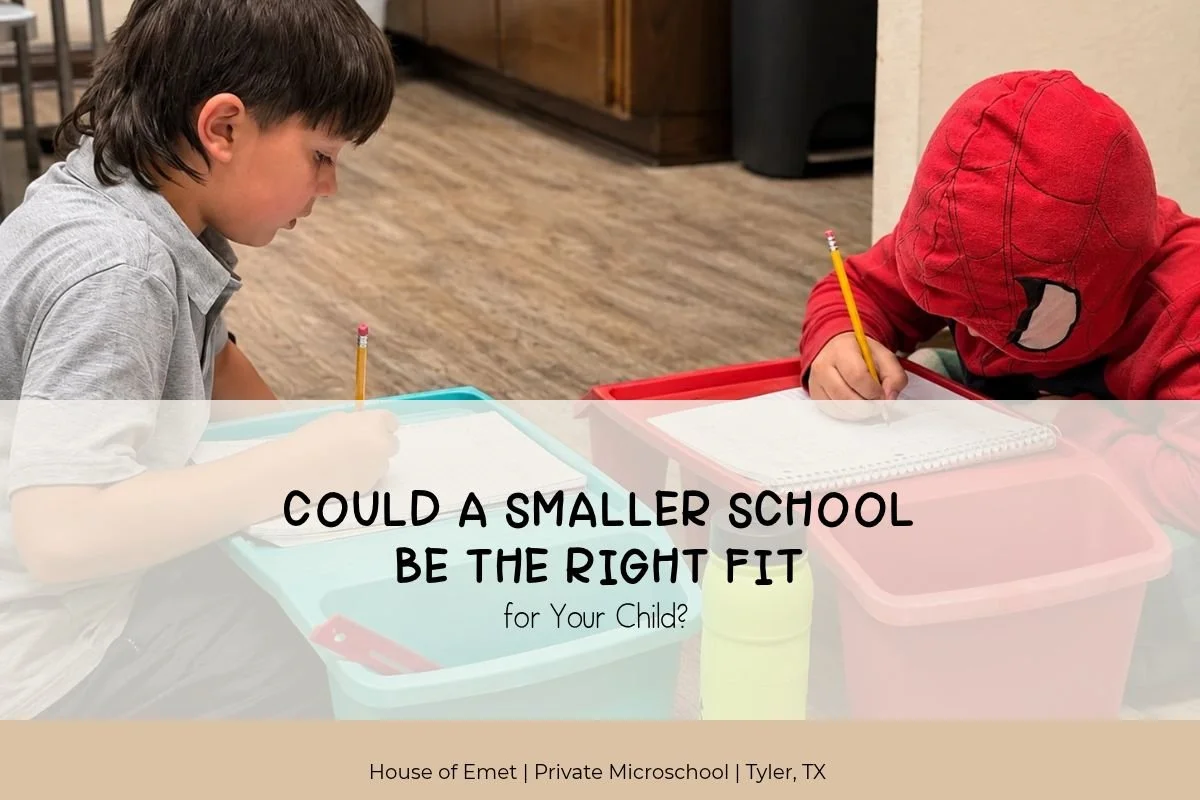
A small learning environment creates opportunities for students to work together, share ideas, and learn from one another.
The same reading level doesn’t mean the same needs
Two students reading at the same grade level don’t necessarily need the same reading instruction. I’ve seen this firsthand at House of Emet.
I had two students reading at the same level, but they needed different things. One needed explicit phonics instruction to help him read the words. The other needed some advanced phonics instruction, but he also needed more time learning how to understand what he was reading.
For a while, I sensed they needed separate instruction. I noticed differences in their interests, listened to them read, and reviewed their work. When another school founder visited House of Emet, she suggested separating them. That confirmed what I had been thinking, and I made the change.
Their reading intervention became one-on-one. Now, I’m noticing that both students are more focused and engaged. My student working on foundational phonics is answering questions, taking chances with reading, and completing independent work. My other student is excited about his chapter book, and I can spend more time teaching close-reading strategies.
That experience is one example of what personal attention looks like in our classroom.
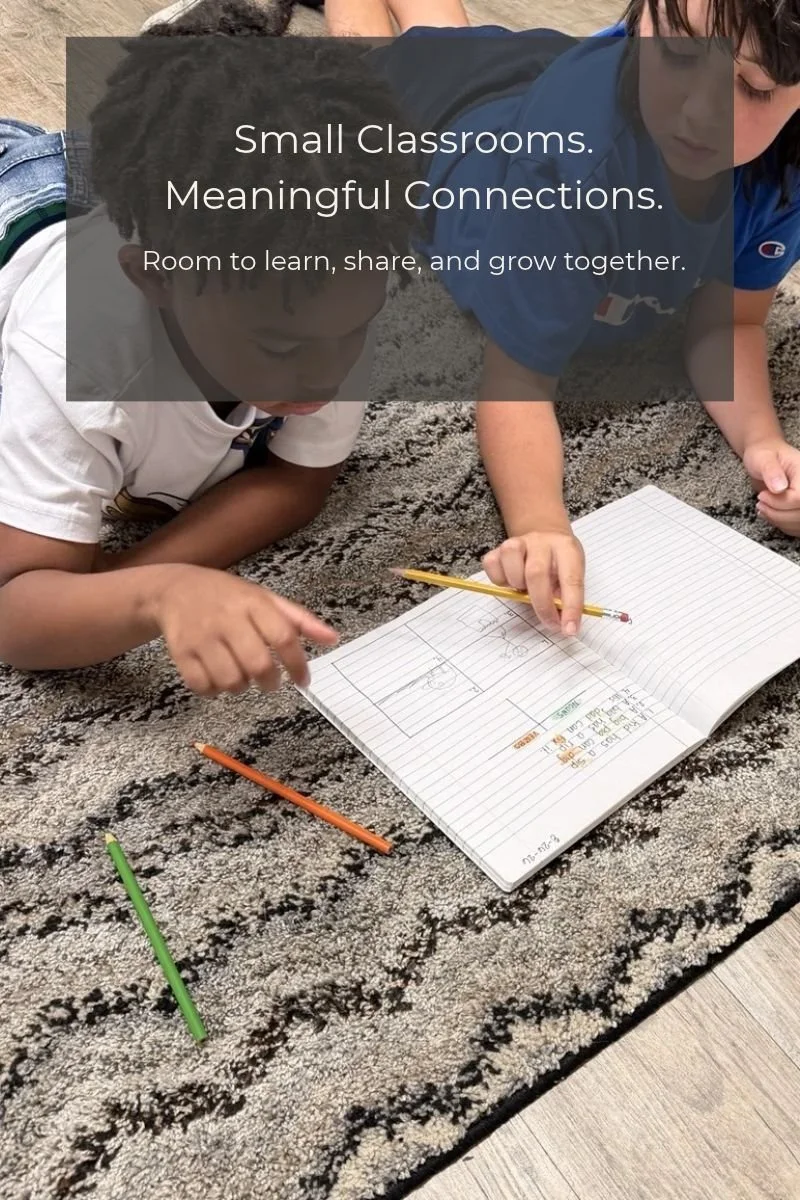
A small learning environment creates opportunities for students to work together, share ideas, and learn from one another.
Making room for different ways of learning
I’ve made similar adjustments in math.
When I noticed that all three of my students were performing at different levels, I decided to use Khan Academy so each child could work at their own level. This also gives me time to pull students individually and teach what they need.
We still come together for group math talks. We share ideas and think through problems together. But their individual math instruction is tailored to where they are.
I’ve noticed that my students are excited about math.
For a parent considering a smaller school, I think this is a useful question: What happens when my child needs something different?
At House of Emet, I’m continually learning about my students and adjusting instruction. Sometimes that means changing a group. Sometimes it means spending less time on one skill so we can spend more time on another. The smaller setting gives me room to notice and respond.
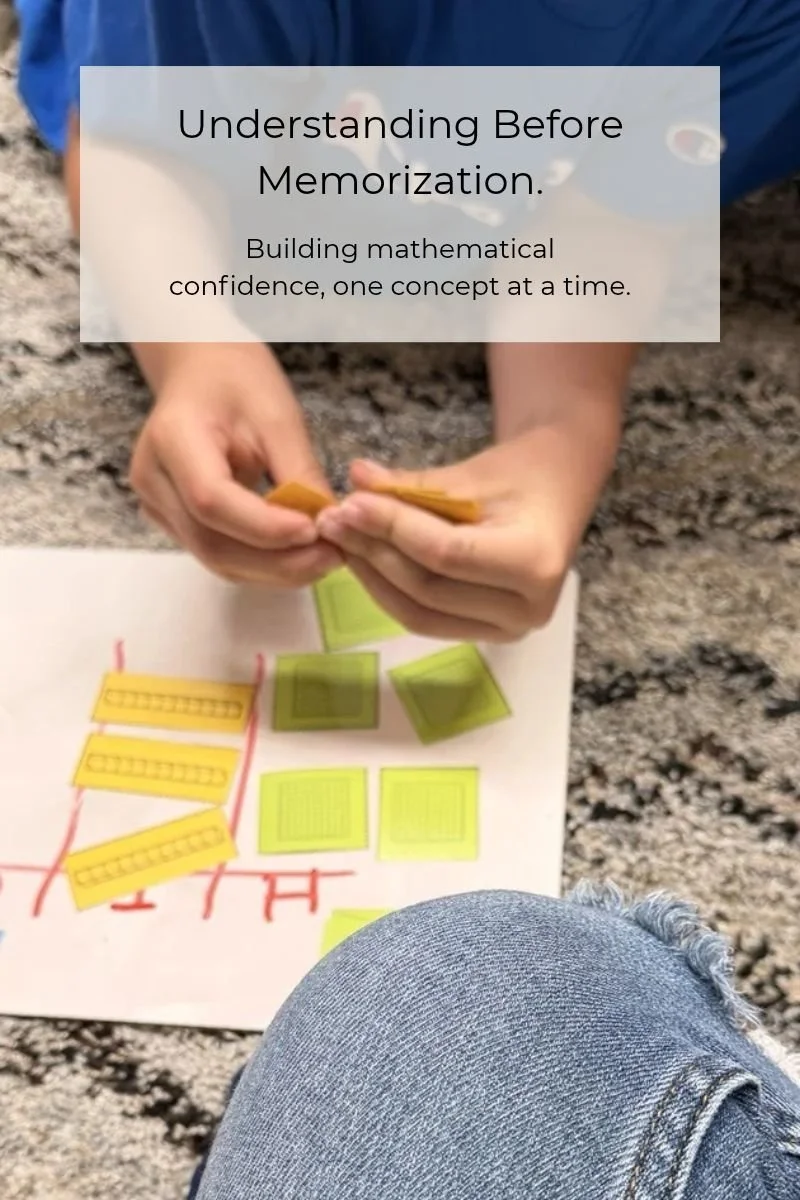
Building numbers with base-ten blocks helps students see and understand the mathematics behind their work.
A calm classroom still has big feelings
A smaller classroom does not promise that children won’t have big emotions or challenging moments.
What I’m noticing is that it gives my students space to experience those overwhelming feelings while I help them work through what is happening and return to learning.
I also try to make assignments manageable before frustration builds. Our writing process normally stretches across three to four weeks. We work on one part each day—a thinking bubble, a paragraph, or revising and editing.
When a child becomes overwhelmed, I allow a brief pause. Once they are calm, I give them a way back into the assignment. During Daily Oral Language, for example, I might ask a child to choose two sentences to correct instead of completing all four.
There is still an expectation to participate. I’m adjusting the amount of work in that moment so the child has a manageable place to begin again.
Putting biblical principles into practice
My faith shapes how I respond in those moments. I stop and pray.
I allow the child a brief moment, help them return to the work, and then have a short conversation later, often during recess or free time. I want to understand what was going on. I also want the child to begin recognizing it.
Then we talk about words they can use next time.
I remind them that God gave them a voice. They can tell me an assignment feels like too much, that they are overwhelmed, or that they need to step away for a minute.
This is part of what I mean when I say students at House of Emet learn to put biblical principles into practice. Faith is part of how we handle frustration, communicate our needs, and respond to one another throughout the day.
That learning takes practice. My hope is that children grow in their ability to recognize what they need and express it.
A school and family partnership
Choosing a school also means considering how the school and your family will work together.
House of Emet has a four-day school week. Parents need to consider whether that schedule benefits their family and how they will manage Fridays.
Families should also understand that I hold high expectations for every student. I expect children to participate, put forth effort, and keep growing, and I provide support as they work toward those expectations. As the reading and writing examples show, the instruction or workload may look different from one child to another.
Parent partnership is required here. I expect parents to read our monthly newsletter, attend parent-teacher conferences every nine weeks, and respond when we need to discuss their child.
I’m thankful for the relationships we’re building with our current families. They participate in our group text, share when their children have games, and ask what House of Emet needs to succeed. I enjoy attending their children’s activities when I can.
That connection helps us know and support the child together.
What academic restoration means to me
When I talk about academic restoration, I mean strengthening a child’s relationship with school.
I want students to be learning, feeling safe, and building relationships they are excited about and proud of. My hope is that each child leaves House of Emet confident in their ability to learn and advocate for what they need.
A smaller school may be worth exploring if you’re looking for an environment where instruction can be adjusted, your child can be known personally, and Christian faith shapes everyday learning.
Class size alone won’t answer every question. Ask how a school responds when a child struggles, how it adjusts instruction, and what it expects from parents.
If you’d like to learn more about House of Emet in Tyler, I invite you to reach out. We can talk about your child, what you’re looking for, and whether our school could be a good fit for your family.
Come See House of Emet for Yourself
Choosing a school is a big decision, and reading about a school is different from experiencing it.
If you're exploring a smaller, Christ-centered learning environment for your child in Tyler, Texas, we'd love to meet your family.
