
Can a Microschool Be Academically Rigorous?
If you're considering a microschool for your child, you may have one big question lingering in the back of your mind:
"Will my child actually be challenged?"
I understand that concern.
For many parents, the word microschool sounds new and unfamiliar. You may picture students sitting on bean bags all day, doing arts and crafts, or learning without much structure.
And if you're being honest, you might be wondering:
"Can a microschool be academically rigorous?"
The short answer?
Absolutely.
In fact, for many children, a microschool can provide a more rigorous learning experience than a traditional classroom because instruction is often tailored to the child rather than the system.
Let's talk about why.
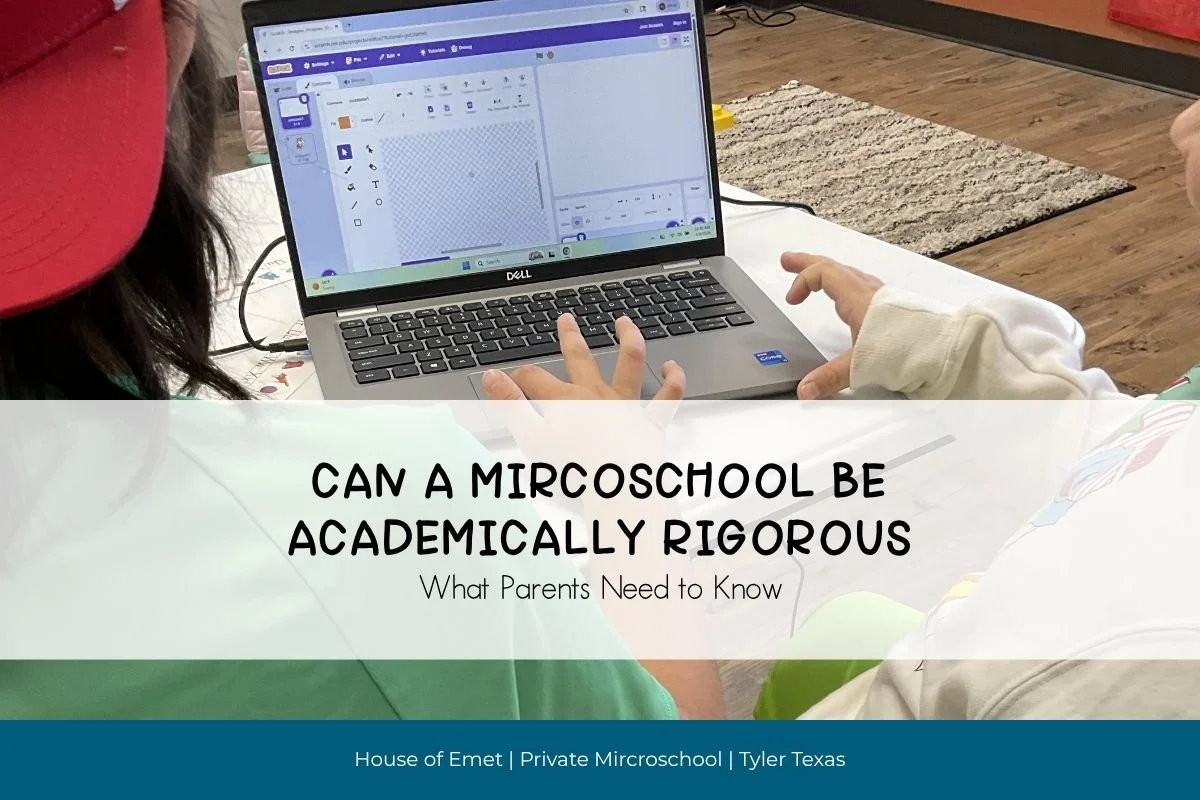
Academic rigor isn't about more worksheets—it's about deeper understanding.
A Microschool Is a Real School
One of the biggest misconceptions about microschools is that they aren't "real schools."
In reality, most microschools provide structured academic instruction, qualified educators, curriculum, assessments, and clear learning goals.
At House of Emet, students aren't simply left to figure things out on their own.
There are lessons.
There is instruction.
There are expectations.
There is accountability.
The difference is that learning happens in a smaller environment where students are known personally and instruction can be adjusted more quickly when a child needs support or additional challenges.
Small Class Sizes Allow for Higher Expectations
This may sound backward at first, but smaller classrooms often make it harder for students to hide.
In a traditional classroom with twenty-five or thirty students, it can be easy for a child to quietly struggle without anyone noticing.
In a microschool, that's much more difficult.
When there are only a handful of students in a learning environment, the teacher knows:
Who understands the lesson
Who needs additional support
Who is ready for more challenge
Who is avoiding difficult work
Because students are seen, they are often challenged more appropriately.
Instead of teaching to the middle, instruction can be adjusted to meet students where they are.
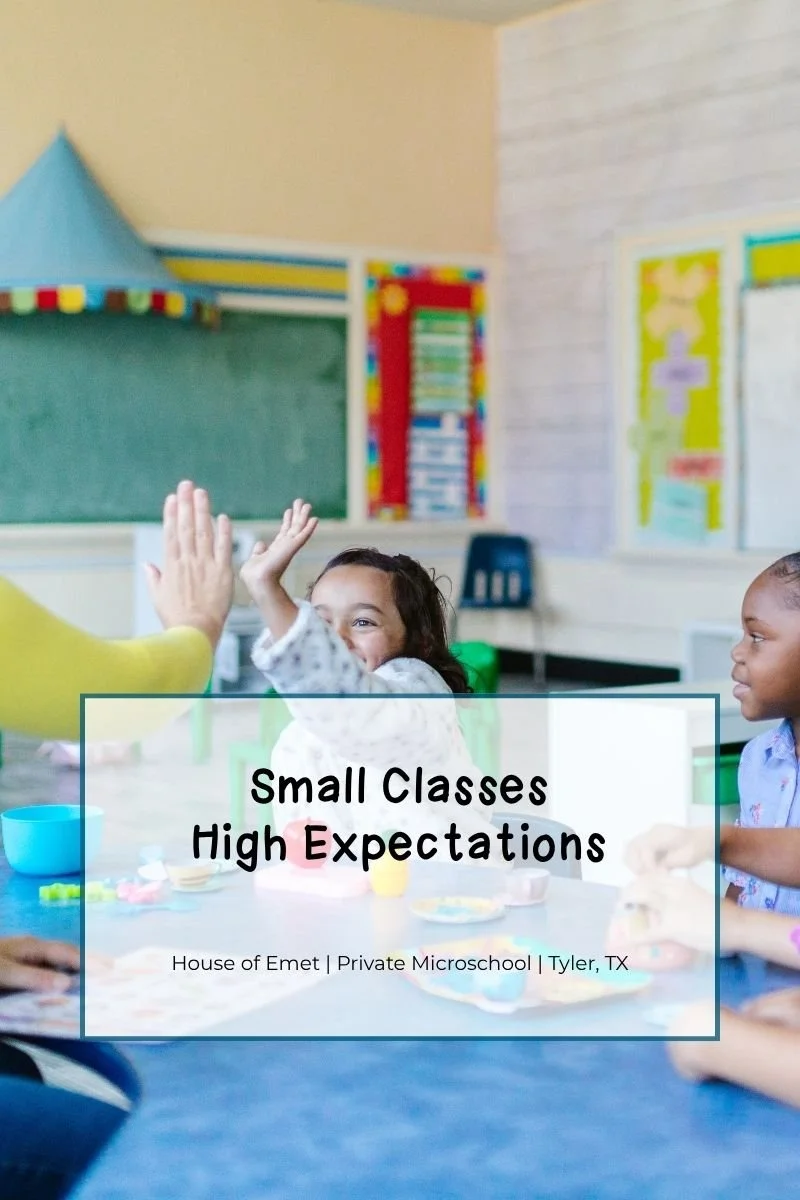
Small class sizes allow students to receive the challenge and support they need.
Mixed-Age Classrooms Create Natural Academic Growth
Another concern some parents have is the idea of a multi-age classroom.
At first glance, it can seem strange.
But mixed-age learning environments often create opportunities that are difficult to replicate in a traditional classroom.
Younger students are regularly exposed to more advanced vocabulary, discussions, and concepts.
Older students strengthen their understanding by helping younger classmates.
Students learn to adapt, collaborate, and communicate with children at different developmental stages.
Rather than limiting growth, mixed-age classrooms often expand it.
Mastery Matters More Than Moving On
One of the things I love most about the microschool model is that we don't have to rush children through learning just because the calendar says it's time.
In many traditional settings, the curriculum keeps moving whether students understand the material or not.
Microschools have the flexibility to focus on mastery.
That means students spend time building understanding before moving on.
If a child needs additional support in reading, we provide it.
If a student is ready for advanced work, we can challenge them.
The goal isn't simply to finish a lesson.
The goal is for students to actually learn it.
Because real rigor isn't about moving faster.
Real rigor is about understanding more deeply.
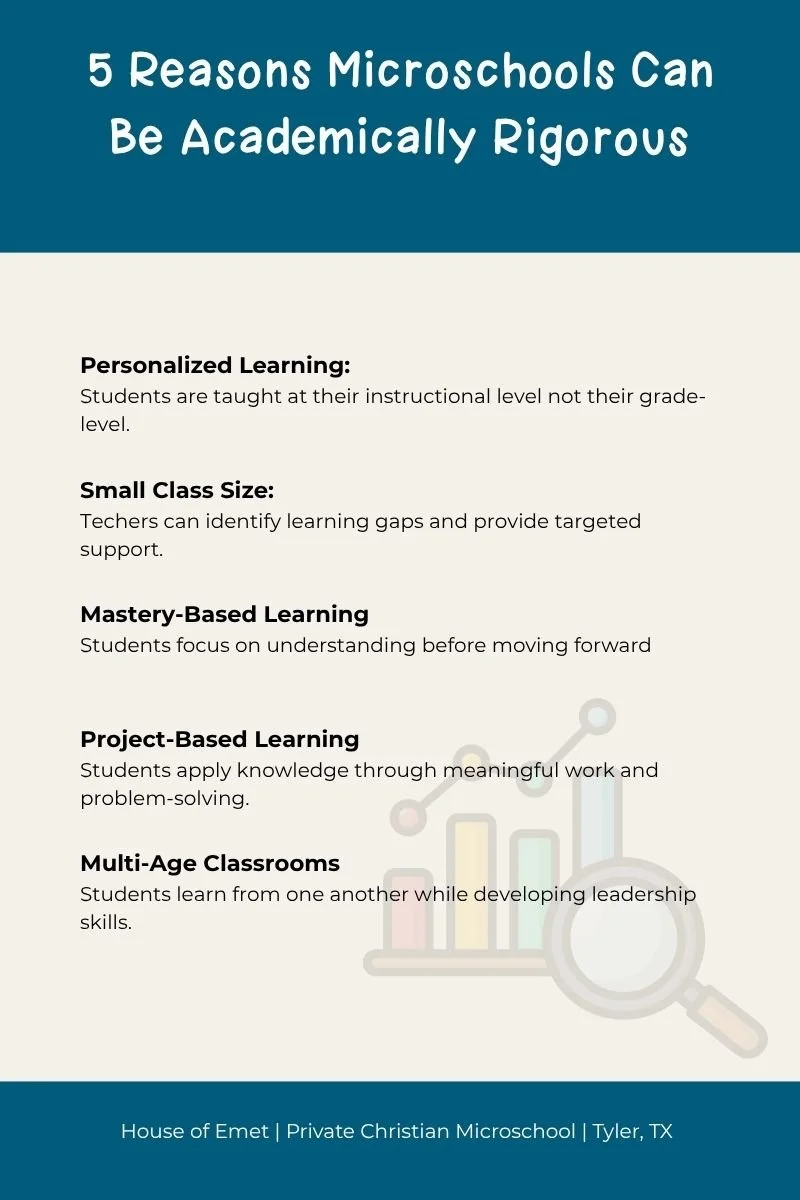
Project-Based Learning Can Be Rigorous
Sometimes parents hear the phrase project-based learning and assume it means less academics.
But meaningful projects require students to apply what they've learned.
Students must research.
Ask questions.
Solve problems.
Communicate ideas.
Think critically.
Work through challenges.
That's not easier than completing a worksheet.
In many cases, it's harder.
Project-based learning asks students to take knowledge and use it in meaningful ways.
And that's where deeper learning often happens.
Students Learn to Think, Not Just Memorize
One of the biggest goals at House of Emet is helping students become thinkers.
Of course we want students to learn reading, writing, math, science, and history.
Those things matter.
But we also want students to learn how to:
Ask good questions
Solve problems
Communicate clearly
Think independently
Persevere when something is difficult
Those skills serve students long after they've forgotten a vocabulary list or a math worksheet.
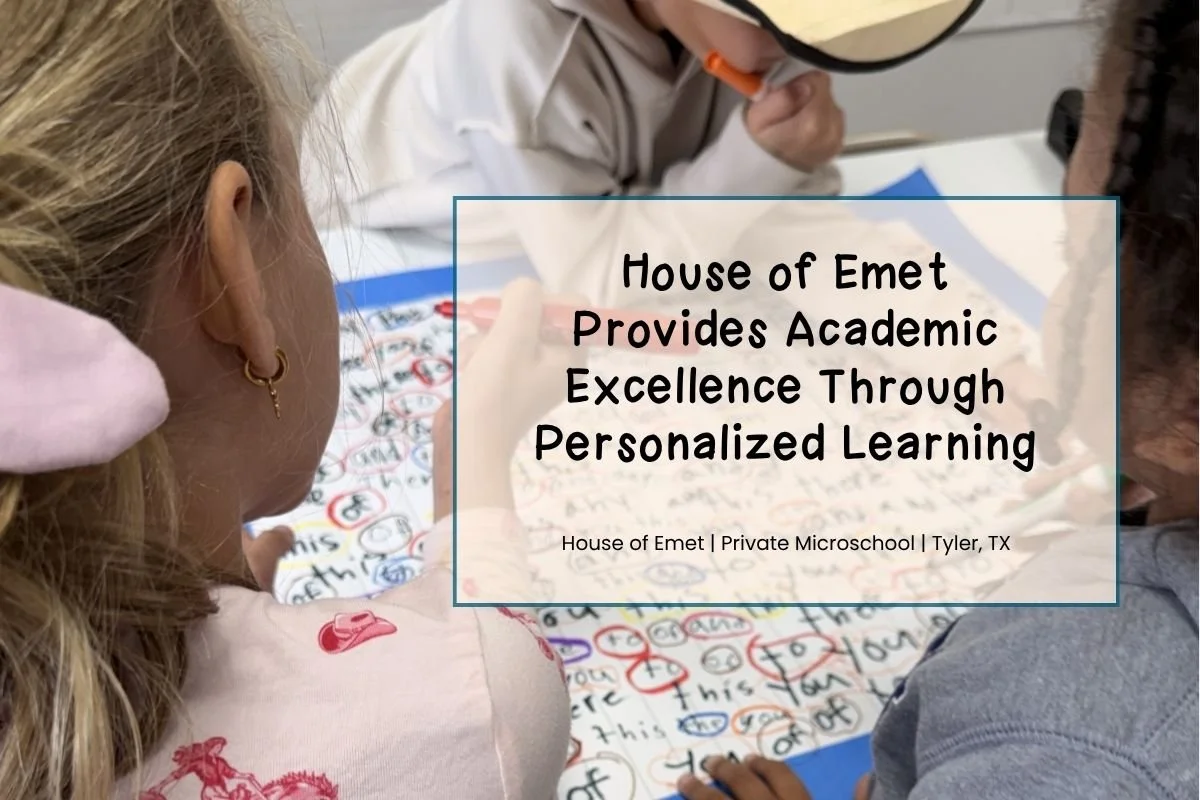
Students demonstrate learning by applying knowledge to real-world projects
So, Can a Microschool Be Academically Rigorous?
Yes.
A microschool can absolutely be academically rigorous.
In fact, many families discover that their children are challenged in new ways because they are no longer learning in a one-size-fits-all environment.
When students receive individualized attention, work toward mastery, participate in meaningful projects, and learn alongside students of different ages, academic growth often becomes more visible—not less.
At House of Emet, we believe rigor and relationships belong together.
Children should be challenged.
They should be expected to grow.
But they should also be known, supported, and encouraged along the way.
Because academic success isn't just about what students know.
It's about helping them become confident learners who are prepared for whatever comes next.
Frequently Asked Questions
Are microschools academically rigorous?
Yes. Many microschools provide rigorous academic instruction through personalized learning, mastery-based education, and small class sizes.
How do microschools challenge advanced students?
Because teachers work with fewer students, they can provide advanced materials and individualized instruction when students are ready for greater challenges.
Is project-based learning academically rigorous?
Yes. Effective project-based learning requires students to research, analyze, solve problems, communicate ideas, and apply academic skills in meaningful ways.
Do students learn enough in a multi-age classroom?
Yes. Multi-age classrooms often expose students to a wider range of ideas, discussions, and learning opportunities while encouraging mentorship and leadership.
Is a microschool easier than traditional school?
Not necessarily. Many students experience more personalized challenges because instruction is tailored to their actual learning needs rather than a one-size-fits-all curriculum.
