
How Do I Know If a School Is Actually a Good Fit for My Child?
If you’ve been reading along this month, you’ve probably noticed something.
The question most parents are really asking isn’t,
“Is this school good?”
It’s this:
“How do I know if this school is actually a good fit for my child?”
That’s a different question. A wiser one.
And the answer isn’t found in rankings, test scores, or what everyone else is choosing. It’s found by paying attention—to your child, to the environment, and to the quiet nudges God gives when something is right… or when something is off.
If you want to read the official overview for yourself, you can start with the Texas Education Freedom Account (TEFA) information here. (Link “Texas Education Freedom Account (TEFA)” to the official TEFA page.)
Let’s talk about what to look for.
If you’re in Texas and part of what you’re trying to understand is the options; what’s available and how families are paying for different learning environments. I’m hosting a TEFA Family Meeting. It’s not a sales pitch. It’s just a clear space to learn, ask questions, and leave with less confusion.

What to look for when you’re deciding what environment supports your child bestwithout panic or pressure.
If part of this question is also about understanding what education options actually exist for families in Texas, you may want to start with our earlier post, What Is TEFA and What Does It Mean for Texas Families? It breaks down the Texas Education Freedom Account in clear, parent-friendly language before any decisions are made.
What Am I Supposed to Look For?
I want to start here, because this is where parents often overthink things.
Romans 8:16 says that the Spirit bears witness with our spirit. In everyday language, that means God confirms things with peace.
And peace doesn’t mean silence.
A school can be lively, joyful, even noisy—and still feel peaceful.
Peace means there’s no confusion. No constant tension. No chaos disguised as structure.
When a school is a good fit, you’ll often notice:
Clear expectations and boundaries
Not harsh. Not missing. Just present. Kids know what’s expected, and adults follow through consistently.You understand what’s happening
You know how your child is learning, not just what they’re learning. Nothing feels hidden or vague.Communication is clear from beginning to end
You’re not chasing information or feeling like you’re always the last to know.Testing isn’t the main thing
Yes, assessment happens—but it’s framed as a tool, not a threat.
Kids aren’t stressed or anxious about it. They understand it’s there to help them grow, not define them.The environment feels peaceful
This matters. A lot.
When you walk in, you don’t feel tight in your chest. You feel settled—even if you’re still asking questions.
That peace is information. Don’t ignore it.
How Do I Evaluate Without Uprooting My Child?
This is such a real concern. Especially if, like me, stability matters deeply to you.
Here’s the good news: you can evaluate without making any immediate moves.
Start with observation, not action.
This is also where good information helps. If you’re trying to evaluate options without making any immediate moves, the TEFA Family Meeting is designed for exactly that—listen, take notes, ask questions, and go home without pressure to decide.
Have intentional conversations
Ask questions. Take notes. Don’t rush yourself through the answers.Watch your child before and after school
Not just grades—energy, mood, confidence.
Are they constantly tense? Or just tired some days like any kid would be?Notice if you feel out of the loop
Feeling disconnected all the time is a signal worth paying attention to.Listen to what your child talks about
If testing anxiety dominates their school conversations, that’s important data.Pay attention to the environment
This one keeps coming back for a reason.
Ask yourself honestly: Does this place feel peaceful—or constant pressured?
Evaluation doesn’t require upheaval. It requires awareness.
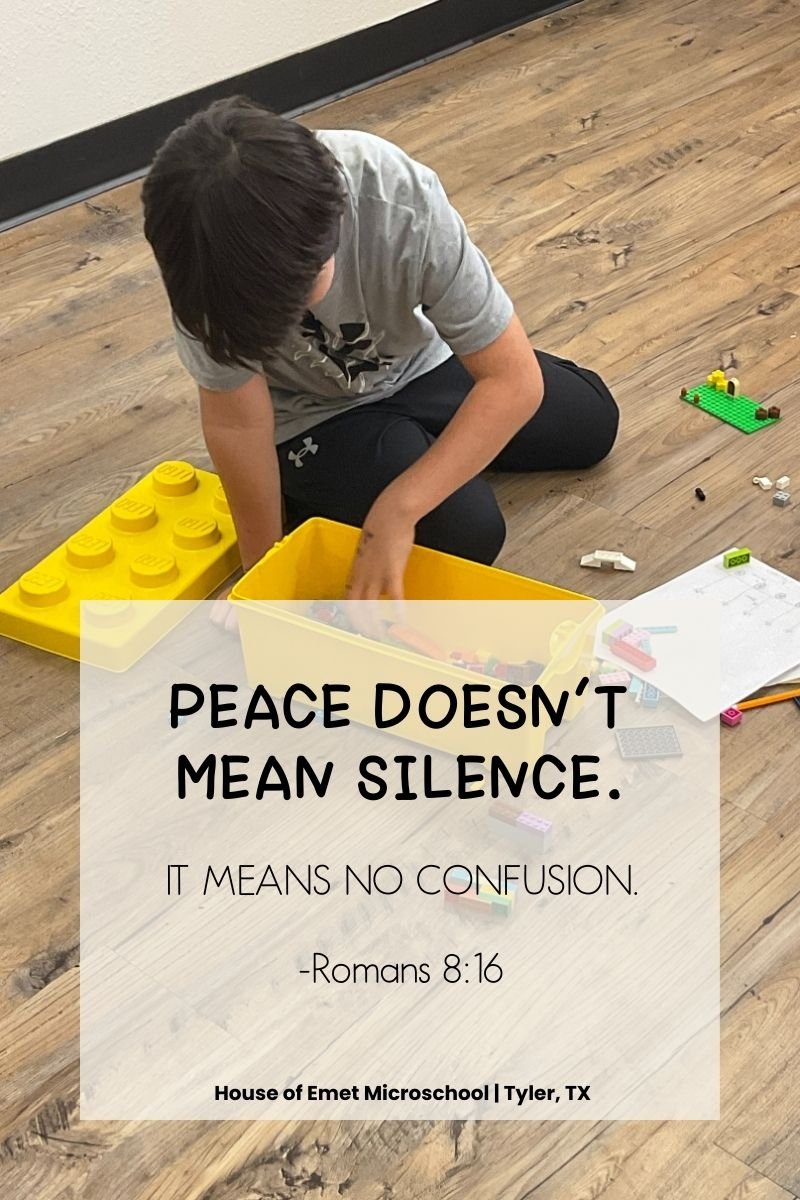
A school can be lively and still feel peaceful—peace shows up as clarity, not confusion.
How Do I Trust Myself Here?
This is often the hardest part.
Because once you start noticing patterns, the question becomes:
“Can I trust what I’m seeing?”
Here’s what I’ve learned—as a teacher and a parent.
Pray first
Invite the Holy Spirit into your decision-making process. Ask for clarity, not speed.Write everything down
When you put things on paper, patterns start to appear.
You’ll begin to see whether your child is simply going through a rough season—or whether something deeper is at play.Trust your discernment
You know your child. You live with them. God entrusted you with their care for a reason.Talk to one trusted, honest friend
Not a crowd. Not someone who will just affirm everything.
Someone who will listen, pray with you, and speak truth gently.
Discernment grows in stillness not pressure.
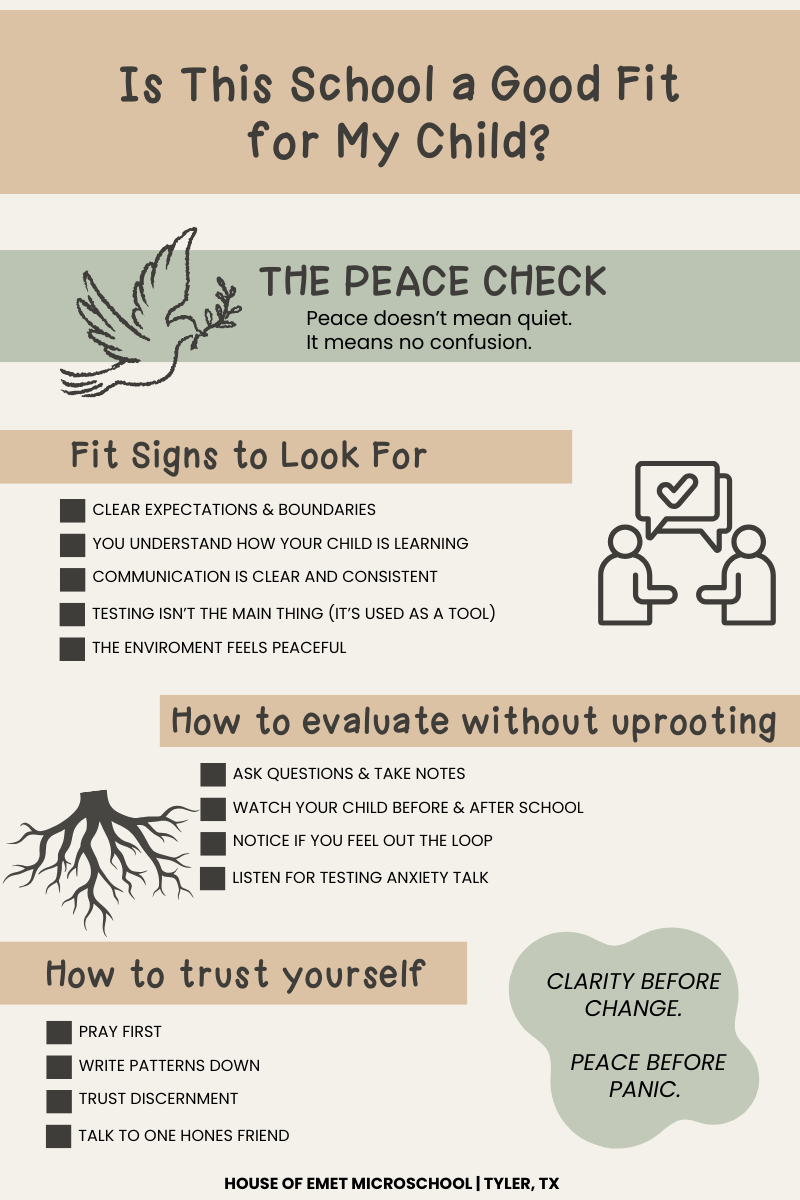
A simple checklist to help parents evaluate school fit with clarity, peace, and confidence.
A Gentle Close
And if you’d like to sit in a room (or virtual space) with other thoughtful parents who are asking these same questions, you’re welcome at the TEFA Family Meeting. Come to learn. Come to ask. Come to discern. No decisions required.
You don’t have to decide today.
You don’t have to justify your questions.
You don’t have to rush the process.
A good fit brings clarity, peace, and support—not confusion, fear, or constant stress.
January was about clarity before change.
Seeing clearly. Naming honestly. Trusting wisely.
Whatever your next step is, let it come from peace—not panic.
You’re not behind.
You’re being faithful.
And if you’re still sorting out whether your child is simply having a hard season or feeling truly overwhelmed, you may find it helpful to read When School Feels Like Too Much: How to Recognize Overwhelm in Elementary Kids. It walks through common signs parents often notice before they ever start asking bigger questions about fit.
