
When School Feels Like Too Much: How to Recognize Overwhelm in Elementary Kids
Let me start here, because I know how quietly heavy this question can feel.
If you’ve found yourself wondering whether school might be overwhelming your child, that doesn’t mean you’re failing as a parent. It means you’re paying attention.
As a teacher, I’ve had countless conversations that start the same way. A parent leans in and says:
“He’s always exhausted after school.”
“She cries over homework that used to be easy.”
“They say they hate school now, and I don’t know what to do with that.”
And then comes the question parents are often afraid to ask out loud:
“Is this just part of growing up… or is something off?”
Let’s talk about that.
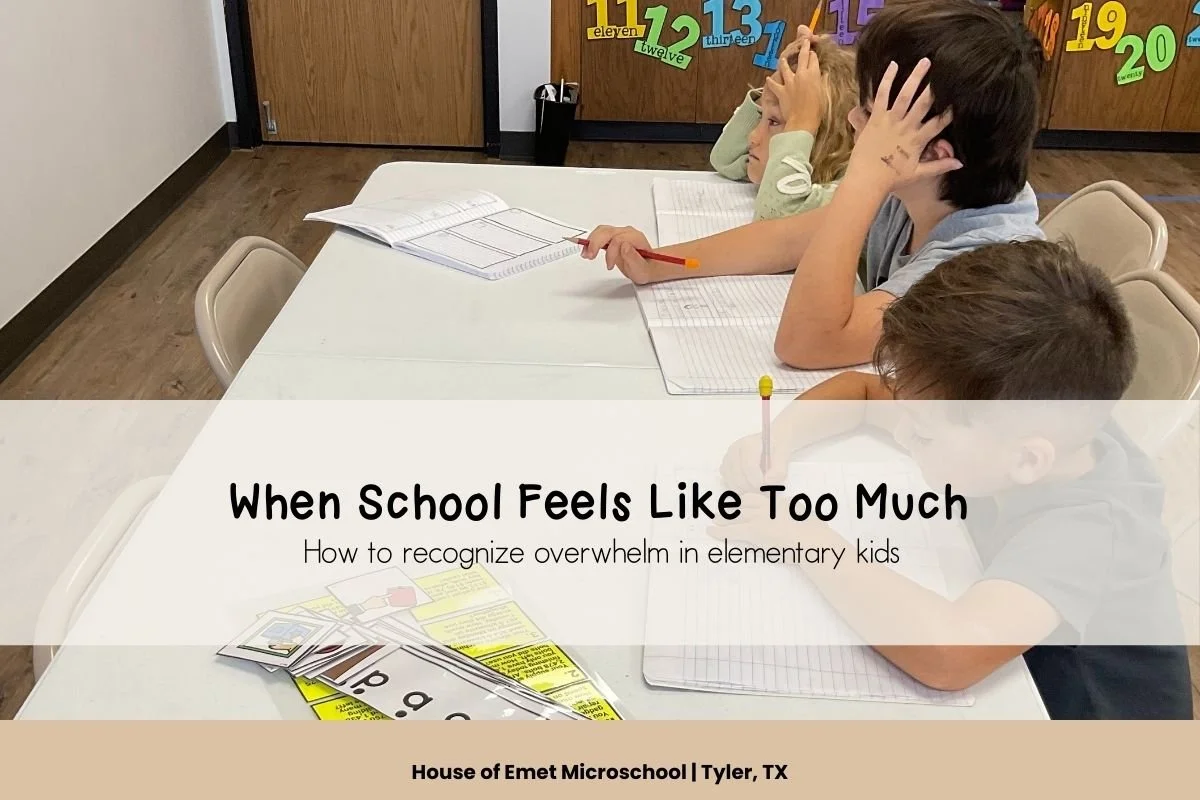
How to tell the difference between healthy struggle and true overwhelm in young learners.
When a Child Isn’t “Struggling,” Just Overloaded
Struggle and overwhelm are not the same thing.
Healthy struggle sounds like:
“This is hard, but I can try.”
Needing help, then gaining confidence
Making mistakes and learning from them
Overwhelm sounds like:
“I can’t do this.”
Shutting down or melting down
Avoiding tasks altogether
Being emotionally drained by school
One stretches a child.
The other slowly wears them down.
And in early elementary, kids don’t usually have the language to explain which one they’re experiencing—so their behavior tells the story instead.
What Overwhelm Actually Looks Like in Young Kids
Overwhelm doesn’t always show up dramatically. Often, it’s subtle.
Parents might notice:
Big emotions after school
Frequent stomachaches or headaches
Sudden perfectionism or fear of mistakes
Resistance to work that used to feel manageable
Becoming nonchalant about things that should matter
None of these automatically mean something is “wrong.”
They often mean the learning environment is asking more than the child can carry right now.
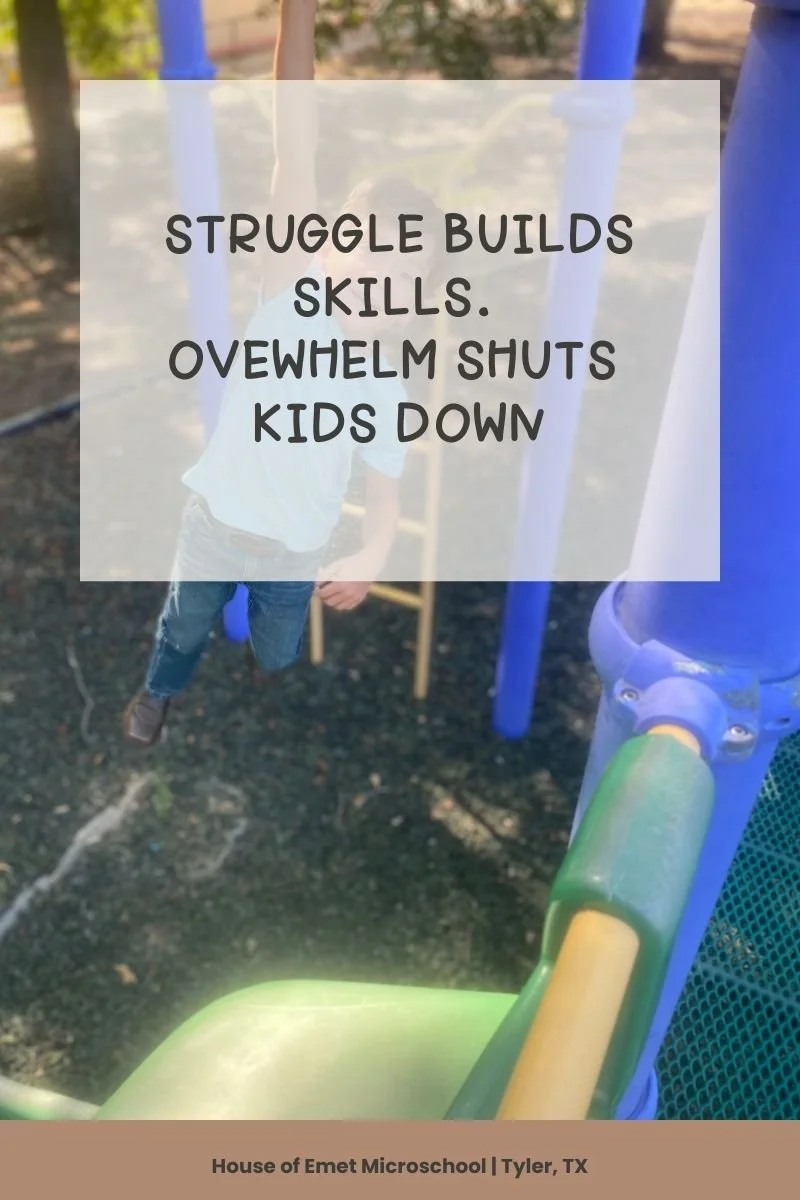
Not all difficulty is harmful. The key is knowing when challenge becomes too much.
Why This Shows Up So Often in Early Elementary
Early elementary is a tender season.
Kids are learning how to:
Focus for longer periods
Regulate emotions
Handle feedback
Work independently
Keep up with academic expectations
That’s a lot to manage at once—especially in environments that move so fast and have limited individual support.
Some kids can handle this type of pressure, but most kids can’t.
Both are capable. They just need different things.
The Question Parents Start Asking
After a while, any parents land here:
“Is my child being challenged—or are they being stretched too thin?”
That question isn’t about quitting or escaping school.
It’s about fit.
And for some families, learning that there are different education structures—smaller environments, flexible pacing, more relational support—opens up new ways to think about learning.
How the Right Structure Can Lighten the Load
Here’s something that surprises a lot of parents:
Overwhelmed kids often don’t need less structure.
They need the right kind of structure.
Supportive structure looks like:
Smaller class sizes
Time to master skills before moving on
Clear routines
Adults who really know the child
Space to recover during the day
When structure fits, learning often feels lighter—not heavier.

A gentle guide for parents learning how to recognize overwhelm and support their child well.
A Gentle Next Step
If this post stirred something in you, here’s my encouragement:
Don’t rush.
Don’t panic.
Just notice.
Notice patterns.
Notice energy.
Notice how your child talks about themselves and learning.
In the next post, we’ll talk about something that keeps many parents stuck—even when they know something isn’t working:
The guilt of changing schools.
👉 Coming next: Why Parents Feel Guilty About Changing Schools—and How to Think About It Differently
